
 Back to main menu
Motu researcher Livvy Mitchell elevates dialogue on youth adversity
Mar 15, 2026
When a young person experiences serious adversity — a suicide, a violent crime — the costs don't stop with them. They ripple outward to their parents, siblings, and communities, showing up in lost income, poorer health and reduced life chances.
Livvy Mitchell, who started at Motu as a Research Analyst, is looking at this issue on the world stage.
Asking hard questions about youth adversity
Livvy’s work sits at the intersection of crime, health, and labour economics. She studies the economic impacts of adverse events affecting young people — and the spillover effects those events have on families and wider social networks, including siblings and classmates.
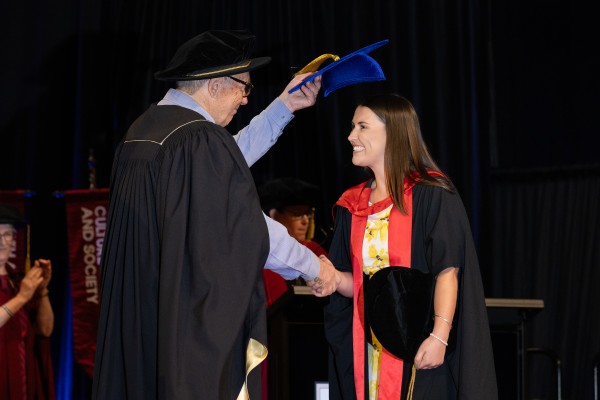
Livvy recently graduated with a PhD in Economics from Auckland University of Technology. Her thesis used advanced econometric methods and linked administrative data to examine how events such as youth suicide and victimisation affect the health and economic outcomes of families and communities. In Aotearoa, rates of youth victimisation and suicide are high by international standards. By measuring the broader costs of these tragedies, her research provides evidence that can help policymakers design more effective support for affected families.
Beginnings
Livvy spent two years at Motu as a Research Analyst before starting her PhD. During that time, she contributed to projects across climate policy, human rights, and social outcomes and led research on gendered parenting and the intergenerational transmission of gender stereotypes in Aotearoa.
She worked with Motu researchers on projects commissioned by organisations including the Climate Change Commission, the New Zealand Human Rights Commission, and the Ministry of Business, Innovation and Employment.
Taking Aotearoa New Zealand research to the world
Livvy is now a researcher at the Rockwool Foundation, a non-profit foundation based in Copenhagen that supports independent research on the social and economic sustainability of society.
Her current work continues to explore crime and health economics, with a focus on how adverse events affecting young people shape the lives of families.
Joining the Rockwool Foundation has opened the door to international comparisons. Livvy is now extending her work from Aotearoa into Denmark, comparing the economic impacts of youth bereavement across two countries with similar populations but different welfare systems. “My goal is to identify where each country can learn from the other in supporting families affected by youth adversity,” says Livvy.
Building research capacity at Motu Research
Livvy remains connected to Motu Research as a Research Affiliate and continues to support our community of early-career researchers. Her journey reflects one of Motu’s core objectives: building the capability of the next generation of economic researchers.
Motu Executive Director Dr John McDermott says “We’re very proud of Livvy’s work, and our role in supporting her career. Supporting early career researchers through our mentoring, hands-on research opportunities, and scholarships is essential for building capability in the next generation of economic researchers, so they have the skills to tackle complex public policy challenges”.
We are proud to see her work shaping conversations about how societies support families through some of life’s hardest moments — and we look forward to seeing where her research goes next.


